“Nós somos portugueses. Portugueses da Índia.”: identidade pós-colonial em Um Estranho em Goa (2000), de José Eduardo Agualusa.
DOI:
https://doi.org/10.35520/mulemba.2017.v9n16a4667Keywords:
Literatura angolana, Agualusa, viagem, identidade, estranho.Abstract
O objetivo do estudo é analisar no romance Um Estranho em Goa (2000), de José Eduardo Agualusa, a questão da permanência minoritária de matriz lusófona, após a anexação de Goa (1961), em uma sociedade hindu, bem como as relações com o colonialismo e a identidade, entre o eu e o outro em um espaço multicultural e seu sistema de representações. Eles serão estudados a partir das concepções de escritor-viajante (Pageaux) e dos conceitos de cultura híbrida (Bhabha), de identidade pós-colonial (Mata) e de identidade fragmentada (Garmes).
Downloads
References
AGUALUSA, José Eduardo. Um Estranho em Goa. Rio de Janeiro: Gryphus, 2001.
BHABHA, Homi. Ética e Estética do Globalismo: Uma Perspectiva Pós-Colonial. In: _____. A Urgência da Teoria. Lisboa: Fundação Calouste Gulbenkian e Tinta da China, 2000. p. 23-44.
CISALPINO, Murilo. Religiões. 3. impr. São Paulo: Scipione, 2003.
CLARA, Fernando. “O fim da Europa. Onde a nação acaba e o império começa”. In: SANCHES, Manuela R. (Dir.). Portugal não é um país pequeno. Lisboa: Edições Cotovia, 2006. p. 271-283.
DOMINGUES, Evandro L. v. S. Seis olhares sobre um estranho em Goa. Gragoatá, Rio de Janeiro, n. 19, p. 105-122, 2. sem. 2005.
ETTE, Ottmar. Literature on the Move. Transl. by Katharina Vester. Amsterdam; New York, 2003.
GARMES, Hélder. Identidade Mestiça de Goa a Cabo Verde. In: CHAVES, Rita; MACEDO, Tânia. (Orgs.). Literaturas em movimento: Hibridismo Cultural e Exercício crítico. São Paulo: Arte e Ciência, 2003. p. .
MACHADO, Álvaro M.; PAGEAUX, Daniel-Henri. Da Literatura Comparada à Teoria da Literatura. 2 ed. rev. e aum. Lisboa: Editorial Presença, 2001.
MATA, Inocência. Estranhos em permanência: a negação da identidade portuguesa na pós-colonialidade. In: SANCHES, Manuela R. (Org.). Portugal não é um país pequeno: contar o império na pós-colonialidade. Lisboa: Edições Cotovia, 2006. p. 285-315.
MELO, Francisco J. S. A ambigüidade do discurso colonial: Um Estranho em Goa, de José Eduardo Agualusa. Letras de hoje, Porto Alegre, v. 41, n. 3, p. 111-116, set. 2006.
PAGEAUX, Daniel-Henri. “Da imagética cultural ao imaginário. In: BRUGEL, Pierre: CHEVREL, Yves. Compéndio da Literatura Comparada. Trad. de Maria do Rosário Monteiro. Lisboa: Fundação Calouste Gulbenkian, 2004. p. 133-164.
“ROMANCE ANGOLANO PODE SER ROTEIRO MÁGICO”, DIZ AUTOR ANGOLANO. Entrevista concedida por José Eduardo Agualusa. Folha de S. Paulo, 17 de maio de 2001. Disponível em: <http://www1.folha.uol.com.br/folha/ilustrada/ult90u13570.shtml. Acesso em: 7 jun. 2016.
STOCKER, Maria Manuel. Xeque-mate em Goa. Lisboa: Texto, 2005.
Iconografia.
Figura 1- Mapa de Goa. Disponivel em: < http://docplayer.com.br/docs-images/26/7404716/images/4-0.png. Acesso em: 7 jun. 2016.
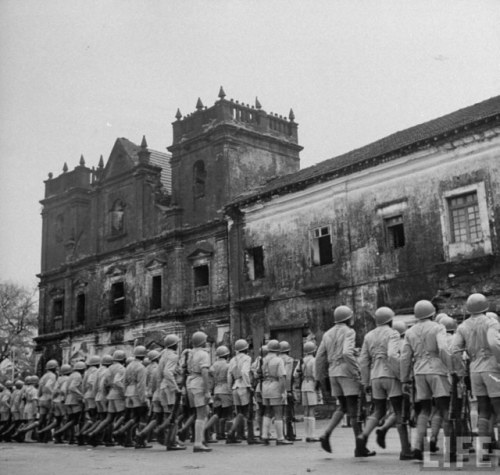
Figura 2- Tropas indianas invadem Goa, 18 de dezembro de 1961. Disponivel em: < https://cidadanialusofona.files.wordpress.com/2009/11/goa.jpg?w=500&h=475. Acesso em: 7 jun. 2016.
Figura 3- São Francisco Xavier (1506-1552). Disponivel em: < https://pt.wikipedia.org/wiki/Francisco_Xavier#/media/File:Franciscus_de_Xabier.jpg. Acesso em: 7 jun. 2016.
Figura 4- Deus Ganesha. Disponivel em: < https://cassiafiletti.files.wordpress.com/2009/02/ganesha5b45d.jpg. Acesso em: 7 jun. 2016.
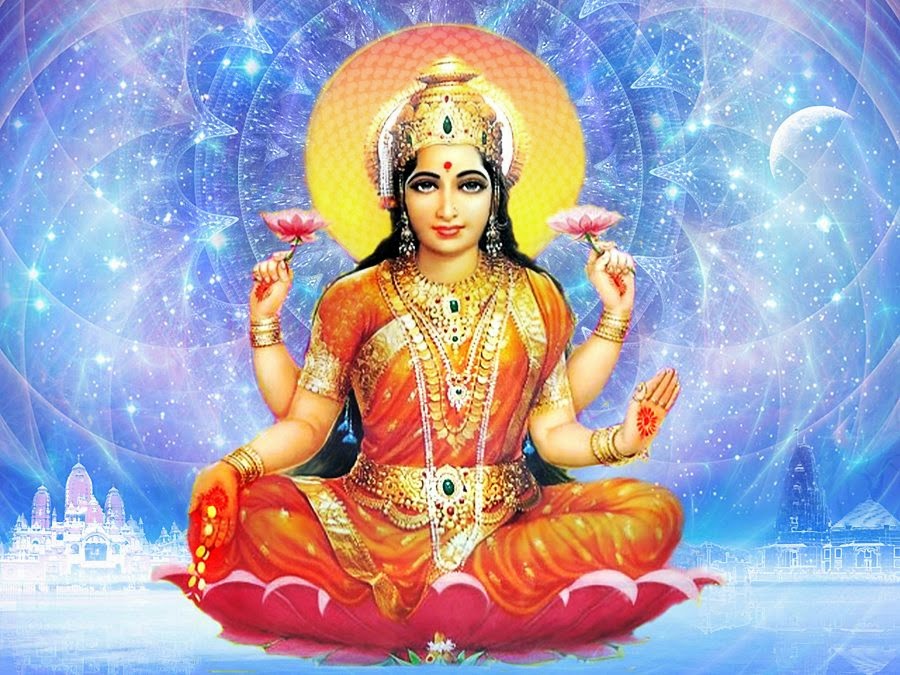
Figura 5- Deusa Laksmi. Disponivel em: <
http://4.bp.blogspot.com/-hqFVrS_kgp8/VPN736sN8LI/AAAAAAAAXoA/D4T_if8N2Zg/s1600/lakshmi_by_valleysequence-d4npq0r.jpg. Acesso em: 7 jun. 2016.
Figura 6- Virgem Maria. Disponivel em: < http://www.santoantoniomguacu.com.br/wp-content/uploads/2015/11/11446_199709306287_197478946287_3666602_1379082_n.jpg. Acesso em: 7 jun. 2016.
Downloads
Published
Issue
Section
License
Authors who publish with this journal agree to the following terms:
- Authors retain copyright and grant the journal right of first publication with the work simultaneously licensed under a Creative Commons Attribution License that allows others to share the work with an acknowledgement of the work's authorship and initial publication in this journal.
- Authors are able to enter into separate, additional contractual arrangements for the non-exclusive distribution of the journal's published version of the work (e.g., post it to an institutional repository or publish it in a book), with an acknowledgement of its initial publication in this journal.
- Authors are permitted and encouraged to post their work online (e.g., in institutional repositories or on their website) prior to and during the submission process, as it can lead to productive exchanges, as well as earlier and greater citation of published work (See The Effect of Open Access).